LESSON 7 *February 7–13
Sabbath Afternoon
Read for This Week’s Study: Phil. 3:17–4:23, 1 Cor. 15:42–44,
John 14:27, Ps. 119:165, Job 1:21, 1 Tim. 6:7.
Memory Text: “Be anxious for nothing, but in everything by prayer
and supplication, with thanksgiving, let your requests be made known
to God” (Philippians 4:6, NKJV).
This week’s lesson concludes our study of Philippians, and it is
packed with valuable lessons and maxims for daily living. It
seems that many of the high moral values that guided the apostle
Paul’s life are found in the closing verses of the epistle. Similar to the
teachings of Jesus, which focus on the inner person, what Paul shares
with us are secrets to living a joyful Christian life.
Even when things don’t go the way we would like, which happens
more often than we would like, we don’t need to be worried or anxious
or discouraged. Instead, there are principles that will help us find
inner strength to face the challenges that life brings, and thus we can
experience a settled and lasting peace that only God can give. The
present and the future are in His hands, and He will supply everything
we need.
Most important, we need not place our hopes in earthly systems
of government, which regularly disappoint us. As Christians, we are
citizens of God’s heavenly kingdom. And with that citizenship comes
privileges, wonderful privileges. And responsibilities, too.
* Study this week’s lesson to prepare for Sabbath, February 14.
EGW Notes — SATURDAY ↓
Sabbath Afternoon, February 7
Lesson 7 - A Heavenly Citizenship
Obedience to the laws of God develops in man a beautiful character that is in harmony with all that is pure and holy and undefiled. In the life of such a man the message of the gospel of Christ is made clear. Accepting the mercy of Christ and His healing from the power of sin, he is brought into right relation with God. His life, cleansed from vanity and selfishness, is filled with the love of God. His daily obedience to the law of God obtains for him a character that assures him eternal life in the kingdom of God.
In His earthly life the Saviour gives us an example of the hallowed lives that may be ours if we will devote our days to doing good to the souls that need our help. It is our privilege to bring joy to the sorrowful, light to the darkened, and life to the perishing. The Lord’s message comes to us, “Why stand ye here all the day idle; work while it is day; for the night cometh when no man can work.” Every word we speak, every act we perform, that conduces to the happiness of others, will conduce to our own happiness, and make our lives like the life of Christ.
Our daily duties are to be cheerfully accepted and cheerfully performed. Our chief duty is to reveal in words and deportment a life which will make manifest the attributes of heaven. The Word of life is given to us to study and practice. Our actions are to be in strict conformity to the laws of the kingdom of heaven. Then heaven can approve our work; and the talents we employ in His service will multiply for greater usefulness. The consecrated life will shine amid the moral darkness of the world, guiding perishing souls to the truth of the Word. . . .
In His Gift to the world the Lord has revealed how solicitous He is that we bear in our lives the marks of our heavenly citizenship by letting every ray of light we have received shine forth in good works to our
fellow-men.—Sons and Daughters of God, p. 42.
Let us individually consider what is the record made in the books of heaven concerning our life and character, and our attitude toward God. Has our love for God been increasing during the past year? If Christ is indeed abiding in our hearts, we shall love God, we shall love to obey all His commandments, and this love will continually deepen and strengthen. If we represent Christ to the world, we shall be pure in heart, in life, in character; we shall be holy in conversation; there will be no guile in our hearts or upon our lips. Let us examine our past life and see if we have given evidence of our love for Jesus by seeking to be like Him, and by working, as He worked, to save those for whom He died.
Of the zealous, self-sacrificing disciples of Christ, it is written that Jesus was not ashamed to call them brethren, so fully did they manifest His Spirit, and bear His likeness. By their works they constantly testified that this world was not their home; their citizenship was above; they were seeking a better country, even a heavenly. Their conversation and affections were on heavenly things. They were in the world, but not of the world; in spirit and practice they were separate from its maxims and customs. Their daily example testified that they were living for the glory of God. Their great interest, like that of their Master, was for the salvation of souls. For this they toiled and sacrificed, counting not their lives dear unto themselves. By their life and character they made a bright track heavenward. Upon such disciples, Jesus can look with satisfaction as His representatives. His character will not be misrepresented through
them.—Lift Him Up, p. 325.
SUNDAY February 8
Role Models
All of us have, at one time or another, found people we admire and
want to emulate. For children, it’s especially important that they have
good role models. Ideally, this would be their father and mother. As
they grow, they will find other role models, perhaps connected with
their chosen career or even in biographies they have read. They can also
learn how various Bible characters dealt with challenges and compare
them to their own life experiences.
Unfortunately, in today’s media, bad role models abound. We are
bombarded with clickbait—stories detailing the salacious problems
and messed-up lives of celebrities. Paul’s readers in Philippi, though
of course not dealing with the internet, nevertheless faced similar challenges.
The fact is, the world Paul lived in was very corrupt, immoral, and
evil, as is ours today. There has always been—and always will be, at
least until the end—more than enough evil to go around. The question
for us is: How do we respond to it?
Read Philippians 3:17–19. How are good and bad role models described
in this passage? What keys are given to distinguish between them?
* Your notes will not be saved!
We must not miss Paul’s love toward those with whom he disagrees—
he weeps over them! Notice also that he doesn’t call them his enemies
but “enemies of the cross of Christ” (Phil. 3:18). Paul recognized that
much larger issues were at stake, namely, how the Cross breaks down
barriers and places us all on the same level, as sinners in need of a
Savior (see Eph. 2:11–14).
Also, not to be overlooked is how Paul urges the Philippians to focus
on the good examples, not the bad; to observe carefully those whose
manner of life is much like his own. Interestingly, Paul uses similar
language in warning the Romans to “note those who cause divisions
and offenses, contrary to the doctrine which you learned, and avoid
them” (Rom. 16:17, NKJV). The deceivers in Rome are described as
those who “do not serve our Lord Jesus Christ but their own belly”
(Rom. 16:18, NKJV).
Though, of course, Jesus is the only perfect pattern, there are others
who, at least in certain areas, could be good role models. At
the same time, what kind of role model do you present to others?
EGW Notes — SUNDAY ↓
Sunday, February 8
Role Models
The people of God—the true Israel—though scattered throughout all nations, are on earth but sojourners, whose citizenship is in heaven.
The condition of being received into the Lord’s family is coming out from the world, separating from all its contaminating influences. The people of God are to have no connection with idolatry in any of its forms. They are to reach a higher standard. We are to be distinguished from the world, and then God says, “I will receive you as members of My royal family, children of the heavenly King.” As believers in the truth we are to be distinct in practice from sin and sinners. Our citizenship is in heaven.
We should realize more clearly the value of the promises God has made to us, and appreciate more deeply the honor He has given us. God can bestow no higher honor upon mortals than to adopt them into His family, giving them the privilege of calling Him Father. There is no degradation in becoming children of God.
We are strangers and pilgrims in this world. We are to wait, watch, pray, and work. The whole mind, the whole soul, the whole heart, and the whole strength are purchased by the blood of the Son of God. We are not to feel it our duty to wear a pilgrim’s dress of just such a color, just such a shape, but neat, modest apparel, that the word of inspiration teaches us we should wear. If our hearts are united with Christ’s heart, we shall have a most intense desire to be clothed with His righteousness. Nothing will be put upon the person to attract attention, or to create controversy.
Christianity—how many there are who do not know what it is! It is not something put on the outside. It is a life inwrought with the life of Jesus. It means that we are wearing the robe of Christ’s righteousness.
Citizens of heaven will make the best citizens of earth. A correct view of our duty to God leads to clear perceptions of our duty to our fellow
men.—God’s Amazing Grace, p. 57.
We cannot afford by our example to seem to sanction wrongdoing. There is a heaven to win and a hell to shun. In large churches of believers . . . there is special danger of lowering the standard. Where many are gathered together some are more liable to grow careless and indifferent than they would be if isolated and made to stand alone. But even under adverse circumstances we may watch unto prayer and set an example in godly conversation that will be a powerful testimony for the right. . . . We cannot afford to speak words that would discourage our fellow pilgrims in the Christian pathway. Christ has given His life in order that we might live with Him in glory. Throughout eternity He will bear in His hands the prints of the cruel nails by which He was transfixed to the cross of Calvary. . . .
We are now fitting up for the future, eternal life; and soon, if faithful, we shall see the gates of the city of our God swing back on their glittering hinges that the nations who have kept the truth may enter in to their eternal
inheritance.—In Heavenly Places, p. 299.
MONDAY February 9
“Stand Fast in the Lord”
Read Philippians 3:20, 21. How does Paul vividly describe what
Christian “citizenship” looks like?
Unlike the enemies of the Cross, who “set their mind on earthly
things” and have no greater god than their bellies (Phil. 3:19), Christian
citizenship is in heaven, and our ruler is Jesus Christ Himself. To underscore
the point, Paul highlights the need for “these humble bodies of
ours” (Phil. 3:21, NET), subject to disease, deterioration, and death, to
be transformed to be like Christ’s glorious resurrection body.
How do the following passages describe the glorified state?
Job 19:25–27
Luke 24:39
1 Cor. 15:42–44
1 Cor. 15:50–54
Col. 3:4
In the end, through Jesus, death, “the last enemy,” will be destroyed
(1 Cor. 15:26). And that is our greatest hope, the ultimate promise
that we have been given in Jesus—not only the end of death but a
whole new body, even a “glorious body” (Phil. 3:21, ESV).
In a book about how to find “salvation” without God, which argued,
rather foolishly, that overcoming the fear of death is “salvation,” author
Luc Ferry does admit that Christianity “enables us not only to transcend
the fear of death, but also to beat death itself. And by doing so in terms
of individual identity, rather than anonymity or abstraction, it seems
to be the only version that offers a truly definitive victory of personal
immortality over our condition as mortals.”—Ferry, A Brief History of
Thought (New York: HarperCollins, 2011, Kindle edition), p. 90. Quite
an admission, coming from an atheist.
Thus, for Paul, our heavenly citizenship includes the promise of
the resurrection and eternal life in a whole new existence that we can
barely imagine now.
Why is the promise of eternal life so crucial to all that we believe?
What could this world possibly offer that’s worth forfeiting what
Christ offers us?
EGW Notes — MONDAY ↓
Monday, February 9
“Stand Fast in the Lord”
The truth of God obeyed, the living by every word of God, is alone sufficient to make any of us stand in these evil times. Satan is playing the game of life for the soul. . . .
There are opportunities and advantages which are within the reach of all to strengthen the moral and spiritual powers. The mind can be expanded and ennobled and should be made to dwell upon heavenly things. . . . Unless it flows in a heavenward direction it becomes an easy prey to the temptation of Satan to engage in worldly projects and enterprises that have no special connection with God. And all zeal and devotion and restless energy and feverish desire are brought into this work, and the devil stands by and laughs to see human effort wrestling so perseveringly for an object that it will never gain, which eludes its grasp. . . . Schemes and projects which Satan invents ensnare the soul, and poor, deceived human beings go on blindfolded to their own ruin. . . .
There is one safeguard against Satan’s deceptions and snares, that is the truth as it is in Jesus. The truth planted in the heart, nourished by watchfulness and prayer, nourished by the grace of Christ, will give us discernment. The truth must abide in the heart, be felt in its power in spite of all the alluring enchantments of Satan, and your experience and mine must be that the truth can purify, guide, and bless the soul. . . .
The enemy is on the track of every one of us, and if we would resist temptations which assail us from without and from within, we need to make sure we are on the Lord’s side, that His truth is in our hearts, that it keeps watch in our souls, ready to sound an alarm and summon us to action against every enemy. Without this defense amid unseen foes we shall be like the willow bending to the blast, driven of the wind and tossed. But if Christ abides in the soul we may be strong in the Lord and in the power of His
might.—That I May Know Him, p. 301.
Strength comes by exercise. All who put to use the ability which God has given them will have increased ability to devote to His service. Those who do nothing in the cause of God will fail to grow in grace and in the knowledge of the truth. A man who would lie down and refuse to exercise his limbs would soon lose all power to use them. Thus the Christian who will not exercise his God-given powers not only fails to grow up into Christ, but he loses the strength which he already has; he becomes a spiritual paralytic. It is those who, with love for God and their fellow men, are striving to help others that become established, strengthened, settled, in the truth. The true Christian works for God, not from impulse, but from principle; not for a day or a month, but during the entire period of life. . . .
O that each one would place a proper estimate upon the capabilities that have been given him of God! Through Christ you may climb the ladder of progress, and bring every power under the control of Jesus. . . . In your own strength you can do nothing; but in the grace of Jesus Christ, you can employ your powers in such a way as to bring the greatest good to your own soul, and the greatest blessing to the souls of others. Lay hold of Jesus, and you will diligently work the works of Christ, and will finally receive the eternal
reward.—God’s Amazing Grace, p. 306.
TUESDAY February 10
Rejoice in the Lord—Always
Read Philippians 4:4–7. How are we to experience “the peace of God”?
After touching on, again, the need for unity (Phil. 4:1–3), Paul moves
on to another theme: rejoicing in the Lord (Phil. 4:4–7).
How many times have you been stressed over things that ultimately
melted effortlessly away as quickly as they appeared? For good reason,
Jesus repeatedly emphasized that we should not worry (see Matt. 6:25–
34, Matt. 10:19), and Peter reminds us that we can cast all our worries
or anxieties (ESV) on the Lord, “because He cares for you” (1 Pet. 5:7,
ESV). In fact, the increasing problems worldwide should inspire us with
hope that the coming of the Lord is near (compare Matt. 24:33, Luke
21:28, James 5:8).
The antidote to anxiety in everything, including every situation, is
sending up a prayer of faith (Phil. 4:6, 7). Clearly, we are to believe
and act on our prayer as having been answered even before we see its
realization, because we are to pray “with thanksgiving.” Also added is
the word “supplication” (Greek: deēsis), signaling times of extremity
and urgency (see, for example, Luke 1:13, Phil. 1:19, 1 Tim. 5:5, James
5:16). Our prayers are still “requests,” but we can know our petitions
have been received as long as we ask “according to His will” (1 John
5:14, NKJV). Then we can rest and have peace, knowing that all our
requests are in God’s hands.
How do the following passages enlarge our understanding of God’s
peace? Ps. 29:11, Isa. 9:6, Luke 2:14, John 14:27, 1 Cor. 14:33.
God’s peace is something the world can never give, because God’s
peace comes from the assurance that we have the gift of eternal life
through Jesus our Savior (Rom. 5:1, Rom. 6:23). This peace impacts
every aspect of life and “surpasses all understanding” (Phil. 4:7,
NKJV). It cannot be grasped by the mind alone, as the Greek word nous
(minds) used here indicates.
How would you describe to someone what it means to experience
“the peace of God”?
EGW Notes — TUESDAY ↓
Tuesday, February 10
Rejoice in the Lord—Always
To the Christian is granted the joy of gathering rays of eternal light from the throne of glory, and of reflecting these rays not only on his own path, but on the paths of those with whom he associates. By speaking words of hope and encouragement, of grateful praise and kindly cheer, he may strive to make those around him better, to elevate them, to point them to heaven and glory, and to lead them to seek, above all earthly things, the eternal substance, the immortal inheritance, the riches that are imperishable.
“Rejoice in the Lord alway,” says the apostle, “and again I say, Rejoice.” Wherever we go, we should carry an atmosphere of Christian hopefulness and cheer; then those who are out of Christ will see attractiveness in the religion we profess; unbelievers will see the consistency of our faith. We need to have more distinct glimpses of heaven, the land where all is brightness and joy. We need to know more of the fullness of the blessed hope. If we are constantly “rejoicing in hope,” we shall be able to speak words of encouragement to those whom we meet. . . .
Not alone in daily association with believers and unbelievers are we to glorify God by speaking often one to another in words of gratitude and rejoicing. As Christians, we are exhorted not to forsake the assembling of ourselves together, for our own refreshing, and to impart the consolation we have received. In these meetings, held from week to week, we should dwell upon God’s goodness and manifold mercies, upon His power to save from sin. In features, in temper, in words, in character, we are to witness that the service of God is good. Thus we proclaim that “the law of the Lord is perfect, converting the soul.”
Our prayer and social meetings should be seasons of special help and encouragement. . . . This can best be done by having a fresh experience daily in the things of God, and by not hesitating to speak of His love in the assemblies of His people. . . .
If we thought and talked more of Jesus, and less of ourselves, we should have much more of His presence. If we abide in Him, we shall be so filled with peace, faith, and courage, and shall have so victorious an experience to relate when we come to meeting, that others will be refreshed by our clear, strong testimony for God. These precious acknowledgments to the praise of the glory of His grace, when supported by a Christlike life, have an irresistible power, which works for the salvation of
souls.—Reflecting Christ, p. 220.
WEDNESDAY February 11
Think on These Things . . .
The peace that surpasses understanding will also “guard your hearts
and minds through Christ Jesus” (Phil. 4:7, NKJV). Our inner life needs
protection. Interestingly, Philippians 4:7 uses a military metaphor in
connection with God’s peace. The Greek verb (phroureō) is used to
describe a garrison of soldiers guarding a city against invasion (2 Cor.
11:32; compare Acts 9:24).
Another very important aspect of inner peace involves living in harmony
with God’s will. “Great peace have they which love thy law: and
nothing shall offend them” (Ps. 119:165).
Read Philippians 4:8, 9. What specific actions are urged?
Paul introduces Philippians 4:8, 9 with “furthermore” (GNV) and a
list of six virtues, followed by a succinct summary of them and encouragement
to imitate Paul’s example. This closing cross-cultural exhortation
fits well within the Greco-Roman setting of Philippi, with its dual
emphasis on virtue and example. Interestingly, though, the focus is on
biblical virtues, which is quite obvious from Paul’s omission of the four
cardinal Greek virtues (prudence, justice, temperance, and courage).
-
True—not accidentally, the list begins with the cardinal biblical
virtue of truth, which Jesus (“Truly, I say . . .”) and the whole New
Testament frequently emphasize (see, for example, Acts 26:25,
Rom. 1:18, 1 Cor. 13:6, 2 Cor. 4:2, Eph. 4:15, 1 Tim. 3:15, James
1:18, 1 Pet. 1:22, 1 John 2:21).
-
Noble—the Greek word refers to a personal virtue (compare its
other uses in 1 Tim. 3:8, 11; Titus 2:2, where it is translated as
“reverent” in the NKJV).
-
Right—this virtue is defined by God’s righteous character (compare
its use in Phil. 1:7).
-
Pure—thought and action flowing from God’s justifying righteousness
received by faith (see 1 John 3:3).
-
Lovely—aesthetic beauty, seen widely in God’s creation.
-
Admirable—“kind and winsome and gracious” (AMPC).
Paul gives two further qualifications, lest a pagan meaning be
imputed to any of these virtues: “If anything is excellent or praiseworthy”
(Phil. 4:8, NIV), we are to think on these heavenly virtues.
Then, to remove all doubt and potential misunderstanding, Paul calls
us to practice what we have learned, received, heard, and seen from his
own example (Phil. 4:9).
EGW Notes — WEDNESDAY ↓
Wednesday, February 11
Think on These Things . . .
If the mind is educated to contemplate heavenly things, the appetite will not be satisfied with that which is cheap and common. We must bear in mind that the Lord is prepared to do great things for us, but we must be prepared to receive these things by emptying from the heart all self-sufficiency and self-confidence. The Lord alone is to be exalted. “Them that honour me,” He says, “I will honour” (1 Samuel 2:30). We need not be on the strain for recognition, for “the Lord knoweth them that are his.” Those who do not put confidence in themselves, but look with distrust upon their own work, are the ones to whom the Lord will reveal His glory. They will make the best use of the blessings received. All who drink of the pure streams of Lebanon, will have the water of life springing up in them, and this cannot be repressed. . . .
The Lord knows that if we look to man, and trust to man, we are leaning on an arm of flesh. He invites our confidence. There is no limit to His power. Think of the Lord Jesus, and His merits and His love, but do not seek to find the defects and dwell upon the mistakes that others have made. Call to your mind the things worthy of your recognition and your praise; and if you are sharp to discern errors in others, be more sharp to recognize the good and praise the good. You may, if you criticize yourself, find things just as objectionable as that which you see in others. Then let us work constantly to strengthen one another in the most holy faith.
In Paul’s epistle to the Philippians, he says, “Paul and Timotheus, the servants of Jesus Christ, to all the saints in Christ Jesus which are at Philippi, with the bishops and deacons: Grace be unto you, and peace, from God our Father, and from the Lord Jesus Christ. I thank my God upon every remembrance of you, always in every prayer of mine for you all making request with joy, for your fellowship in the gospel from the first day until now; being confident of this very thing, that he which hath begun a good work in you will perform it until the day of Jesus Christ” (Philippians 1:1–6). Let us all make this spirit
ours.—This Day With God, p. 300.
THURSDAY February 12
Keys for Contentment
Read Philippians 4:10–13, 19. What keys does Paul reveal for a contented,
happy life?
When extreme circumstances strike (hunger, illness, injury, loss),
one begins to reflect on the things that really count and to dwell on the
blessings that are usually taken for granted. When we are “brought low”
(Phil. 4:12, ESV), “in need” (NIV), or left with “almost nothing” (NLT)
is when faith rises to the occasion.
Conversely, when we “live in prosperity” (NASB), it should always be with
the recognition that it could vanish in an instant (see Prov. 23:5). As both Job
and Paul remind us, we brought nothing into the world when we were born,
and we will take nothing with us to the grave (Job 1:21, 1 Tim. 6:7).
Note the following Bible promises:
-
Psalm 23:1—“The Lord is my shepherd; I have everything I need”
(GNB).
-
Matthew 6:32—“Your heavenly Father knows that you need all
these things” (NKJV).
-
1 Peter 5:7—“Give all your worries and cares to God, for he cares
about you” (NLT).
-
Philippians 4:19—“My God shall supply all your need according
to His riches in glory by Christ Jesus” (NKJV).
And, most wonderful of all: “I can do all things through Christ who
strengthens me” (Phil. 4:13, NKJV). Perhaps none of us can fully grasp
what “all things” entails. Certainly, as with any request for God’s help
and strength, we must ask according to His will. But many times, we
don’t even ask for things we know fit His will. That’s why James 4:2
says, “You do not have, because you do not ask” (ESV).
Here are some things we can ask for confidently because we know
they are in harmony with God’s will:
-
Salvation for a loved one or friend (1 Tim. 2:3, 4)
-
Courage to share our faith (Rev. 22:17)
-
Forgiveness when we confess and forsake wrong (1 John 1:9)
-
Strength to obey God’s commandments (Heb. 13:20, 21)
-
Love for those who hate and mistreat us (Matt. 5:44)
-
Wisdom for challenging situations (James 1:5)
-
Understanding the truth in God’s Word (John 8:32)
How do you deal with the things that you have prayed for that
have not yet come, or perhaps might never come?
EGW Notes — THURSDAY ↓
Thursday, February 12
Keys for Contentment
Pure religion brings peace, happiness, contentment; godliness is profitable to this life and the life to come.
That unrest and discontent which ends in fretting and complaining is sinful; but the discontent with one’s self which urges on to more earnest effort for greater improvement of the mind for a broader field of usefulness is praiseworthy. This discontent does not end in disappointment but in gathering force for a higher and more extended field of usefulness. Only be ever balanced by firm religious principle and a sensitive conscience, having ever the fear of God before you, and you will certainly prosper in becoming fitted for a life of usefulness.
We should live for the next world. It is so wretched to live a haphazard, aimless life. We want an object in life—to live for a purpose. God help us all to be self-sacrificing, less self-caring, more forgetful of self and selfish interest; and to do good, not for the honor we expect to receive here, but because this is the object of our life and will answer the end of our existence. Let our daily prayer go up to God that He will divest us of selfishness. . . .
I have seen that those who live for a purpose, seeking to benefit and bless their fellow men and to honor and glorify their Redeemer, are the truly happy ones on the earth, while the man who is restless, discontented, and seeking this and testing that, hoping to find happiness, is always complaining of disappointment. He is always in want, never satisfied, because he lives for himself alone. Let it be your aim to do good, to act your part in life faithfully.
Be anxious and earnest to grow in grace, seeking for a more distinct and intelligent understanding of the will of God concerning you, striving earnestly for the mark of the prize before you. Christian perfection alone will win the spotless robes of character which will entitle you to stand before the throne of God among the blood-washed throng, bearing the palm branch of everlasting victory and eternal
triumph.—Our High Calling, p. 242.
The soul that is brought into personal contact with Christ becomes a holy temple unto the Lord; for Jesus is made unto the believer wisdom, righteousness, sanctification, and redemption. He who has fully surrendered to God has a consciousness of Christ’s saving presence. He is a possessor of spiritual patience, and has the rest of soul that comes from learning of Him who is meek and lowly of heart. Trusting in Jesus to be his efficiency and righteousness, his soul is filled with a pleasant contentment.
What is the joy of the Christian? It is the result of the consciousness of the presence of Christ. What is the love of the Christian? It is the reflection of the love of Christ. It is the effect of the operation of the Holy Spirit. Looking to the cross of Calvary, we see Jesus dying for the sins of the world, in order that by His death, life and immortality might be brought to light in behalf of the contrite soul. Jesus is all in all, and without Him we can do nothing. Without Christ, spiritual life would be
impossible.—Ye Shall Receive Power, p. 83.
FRIDAY February 13
Further Thought: “Those only who are constantly receiving fresh
supplies of grace, will have power proportionate to their daily need
and their ability to use that power. Instead of looking forward to some
future time when, through a special endowment of spiritual power, they
will receive a miraculous fitting up for soul winning, they are yielding
themselves daily to God, that He may make them vessels meet for His
use. Daily they are improving the opportunities for service that lie within
their reach. Daily they are witnessing for the Master wherever they may
be, whether in some humble sphere of labor in the home, or in a public
field of usefulness.
“To the consecrated worker there is wonderful consolation in the
knowledge that even Christ during His life on earth sought His Father
daily for fresh supplies of needed grace; and from this communion with
God He went forth to strengthen and bless others. . . .
“Every worker who follows the example of Christ will be prepared to
receive and use the power that God has promised to His church for the ripening
of earth’s harvest.”—Ellen G. White, God’s Amazing Grace, p. 117.
“God knows our wants, and has provided for them. The Lord has a
treasure house of supplies for His children, and can give them what
they need under all circumstances. Then why do we not trust Him? He
has made precious promises to His children on condition of faithful
obedience to His precepts. There is not a burden but He can remove, no
darkness but He can dispel, no weakness but He can change to power,
no fears but He can calm, no worthy aspiration but He can guide and
justify.
“We are not to look at ourselves. The more we dwell upon our own
imperfections, the less strength we shall have to overcome them.”—Ellen
G. White, That I May Know Him, p. 224.
Discussion Questions:
-
Think of some of your brightest instances of answered prayer.
How have they helped you experience God’s peace that surpasses
understanding? What about those prayers that are not answered?
How can you still experience the promised peace?
-
In the context of Philippians 4:8, what do you spend your time
thinking about? How well does what you think about strengthen
your faith and walk with the Lord?
-
Discuss the final quotation above. What are the implications of
the statement, “The more we dwell upon our own imperfections,
the less strength we shall have to overcome them”? What is the
key, then, to overcoming?
EGW Notes — FRIDAY ↓
Friday, February 13
For Further Reading
That I May Know Him, “Qualifications of Heavenly Citizenship,” December 13, p. 353.
God’s Amazing Grace, “To Bring Comfort,” April 24, p. 122.
INSIDE STORY
Becoming a Rich Adventist
Little Rene liked everything about Seventh-day Adventists. In his native province in the Philippines, all rich people seemed to be Adventist. They had big rice farms and a good standard of living. Rene wanted a similar lifestyle.
One day, several Adventist children invited him to read the Bible with them. Then the son of his father’s employer, an Adventist rice farmer, invited him to Sabbath School and church.
For the first time, Rene heard about the Sabbath. It sounded logical. He also noticed that the Adventist children dressed well. He liked that they didn’t swear. He wanted to be like them.
When he was 12, he was baptized and joined the Adventist Church.
He didn’t become rich, and his life seemed to grow worse. His family despised him for his faith and stopped supporting his studies. He was forced to quit school. After four years, he had had enough. At 16, he left the church and joined his father in the rice fields of the Adventist farmer. Soon he was drinking, smoking, gambling, and eating all kinds of unclean food.
Two years passed, and a 17-year-old named Rodel knocked on the door.
“I’m a missionary,” he told Rene’s mother. “Can I come in?”
“What kind of missionary?” she asked.
“1000 Missionary Movement,” he said.
“What’s that?” she said.
“I’m a Seventh-day Adventist missionary,” he said.
“Ahh,” Mother said. “My son is an Adventist, but he has backslidden.”
“Where is he?”
“He’s sleeping.”
As a hardworking farmer, Rene was exhausted. Mother led Rodel to him.
“My friend, why have you stopped being an Adventist?” Rodel said.
Rene was surprised but made it clear that he wouldn’t return to the church.
“My family hated me as an Adventist.”
“Can I invite you to church?”
“I don’t think so. I can’t go.”
Rodel left. But a year and a half later, when Rene was 20, he returned.
“My friend, come fishing with me,” he said.
Rodel didn’t try to convince Rene to go to church. He simply befriended him. They went fishing together. After a while, Rene found himself back in church on Sabbaths.
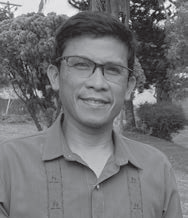
Rene Tucaldo is chief financial officer of the 1000 Missionary Movement, whose headquarters in Silang, Philippines, were constructed with the help of a 1996 Thirteenth Sabbath Offering. Read more next week.
Provided by the General Conference Office of Adventist Mission, which uses Sabbath School
mission offerings to spread the gospel worldwide. Read new stories daily at
AdventistMission.org.