LESSON 5 *January 24–30
Shining as Lights in the Night
Sabbath Afternoon
Read for This Week’s Study: Phil. 2:12–30; Rom.
3:23, 24; Rom. 5:8; 2 Tim. 4:6; 1 Cor. 4:17; 2 Tim. 4:21, 13; Luke
7:2.
Memory Text: “Do all things without complaining and disputing,
that you may become blameless and harmless, children of God without
fault in the midst of a crooked and perverse generation, among
whom you shine as lights in the world” (Philippians 2:14, 15, NKJV).
God told the Hebrews to obey because that obedience “is your
wisdom and your understanding in the sight of the peoples who
will hear all these statutes, and say, ‘Surely this great nation is
a wise and understanding people’ ” (Deut. 4:6, NKJV).
Centuries later Jesus said, “I am the light of the world. He who follows
Me shall not walk in darkness, but have the light of life” (John
8:12, NKJV). He has also said, “ ‘You are the light of the world. A city
that is set on a hill cannot be hidden’ ” (Matt. 5:14, NKJV). How can
we be that light? Only through a close connection with Jesus, “the true
light that gives light to everyone” (John 1:9, NIV). As Philippians 2
says, God “has highly exalted Him and given Him the name which is
above every name, that at the name of Jesus every knee should bow . . .
and that every tongue should confess that Jesus Christ is Lord” (Phil.
2:9–11, NKJV).
The light and power of heaven is available to all of us who have surrendered
our lives to Jesus. But too often either we expect God to do it
all or our own ideas and plans get in the way. That’s why Paul’s words
to the Philippians are so relevant today.
* Study this week’s lesson to prepare for Sabbath, January 31.
EGW Notes — SATURDAY ↓
Sabbath Afternoon, January 24
Lesson 5 - Shining as Lights in the Night
In the parable the wise virgins had oil in their vessels with their lamps. Their light burned with undimmed flame through the night of watching. It helped to swell the illumination for the bridegroom’s honor. Shining out in the darkness, it helped to illuminate the way to the home of the bridegroom, to the marriage feast.
So the followers of Christ are to shed light into the darkness of the world. Through the Holy Spirit, God’s Word is a light as it becomes a transforming power in the life of the receiver. By implanting in their hearts the principles of His Word, the Holy Spirit develops in men the attributes of God. The light of His glory—His character—is to shine forth in His followers. Thus they are to glorify God, to lighten the path to the Bridegroom’s home, to the city of God, to the marriage supper of the Lamb.
The coming of the bridegroom was at midnight—the darkest hour. So the coming of Christ will take place in the darkest period of this earth’s history. The days of Noah and Lot picture the condition of the world just before the coming of the Son of man. The Scriptures pointing forward to this time declare that Satan will work with all power and “with all deceivableness of unrighteousness” (2 Thessalonians 2:9, 10). His working is plainly revealed by the rapidly increasing darkness, the multitudinous errors, heresies, and delusions of these last days. Not only is Satan leading the world captive, but his deceptions are leavening the professed churches of our Lord Jesus Christ. The great apostasy will develop into darkness deep as midnight, impenetrable as sackcloth of hair. To God’s people it will be a night of trial, a night of weeping, a night of persecution for the truth’s sake. But out of that night of darkness God’s light will shine.
He causes “the light to shine out of darkness” (2 Corinthians 4:6). When “the earth was without form, and void; and darkness was upon the face of the deep,” “the Spirit of God moved upon the face of the waters. And God said, Let there be light: and there was light” (Genesis 1:2, 3). So in the night of spiritual darkness, God’s Word goes forth, “Let there be light.” To His people He says, “Arise, shine; for thy light is come, and the glory of the Lord is risen upon thee” (Isaiah 60:1).
“Behold,” says the Scripture, “the darkness shall cover the earth, and gross darkness the people: but the Lord shall arise upon thee, and his glory shall be seen upon thee” (verse
2).—Reflecting Christ, p. 211.
SUNDAY January 25
We Work Out What God Works In
Having just presented Jesus as the perfect example of humility and
obedience to God’s will, Paul now turns to the Philippians themselves. He
affirms their obedience to the Lord after they received the gospel message
(see Acts 16:13–15, 32, 33) and urges them to continue in that obedience.
Having presented the example of Christ’s life and the Cross as the
way of salvation, Paul now focuses more directly on how this all works
in practice.
Read Philippians 2:12, 13. What does Paul mean by saying, “Work out
your own salvation”? How would you describe the relation between
faith and works?
* Your notes will not be saved!
In these two verses, Paul does not present a different gospel from
what he outlines in Romans and in his other epistles. We can be sure
his message here agrees with the gospel of justification by faith, which
he also preached in Philippi and other places. But it’s also important to
consider all the Bible says on a given topic, especially on the topic of
salvation, which can be so misunderstood.
Read Romans 3:23, 24; Romans 5:8; and Ephesians 2:8–10. What do
these passages teach about salvation?
* Your notes will not be saved!
Without question, salvation is God’s work, and we can take absolutely
no credit for it ourselves. Even faith itself is a gift, encouraged
through the work of the Holy Spirit. Our own works cannot save us;
however, through the new birth, God re-creates us spiritually, enabling
us to do good works. God’s Spirit works in us, empowering our will to
choose the right, to resist temptation, and to make right choices.
Thus, we work out what God works in, “with fear and trembling”
(Phil. 2:12). Does that mean we should be afraid of God’s judgment
on our often feeble efforts to obey? Of course not. This phrase refers
to sensing God’s presence (see Ps. 2:11) and our need to obey Him.
In what ways have you experienced Christ working in you? How,
though, does your fallen nature fight against what God is doing
in you, and how can you resist that pull?
EGW Notes — SUNDAY ↓
Sunday, January 25
We Work Out What God Works In
While Jesus, our Intercessor, pleads for us in heaven, the Holy Spirit works in us, to will and to do of His good pleasure. All heaven is interested in the salvation of the soul. Then what reason have we to doubt that the Lord will and does help us? We who teach the people must ourselves have a vital connection with God. In Spirit and Word we should be to the people as a wellspring, because Christ is in us a well of water springing up unto everlasting life. Sorrow and pain may test our patience and our faith; but the brightness of the presence of the Unseen is with us, and we must hide self behind Jesus.
Talk courage to the church; lift them up to God in prayer. Tell them that when they feel that they have sinned, and cannot pray, it is then the time to pray. Many feel humiliated at their failures, that they have been overcome by the enemy in the place of overcoming. Worldliness, selfishness, and carnality have weakened them, and they think it is no use to approach unto God; but this thought is one of the enemy’s suggestions. Ashamed they may be, and deeply humbled; but they must pray and believe. As they confess their sins, He who is faithful and just will forgive them their sins, and cleanse them from all unrighteousness (see 1 John 1:9). Though the mind may wander in prayer, be not discouraged, bring it back to the throne, and do not leave the mercy seat until you have the victory.
Are you to think your victory will be testified by strong emotion? No; “this is the victory that overcometh the world, even our faith” (1 John 5:4). The Lord knows your desire; by faith keep close to Him, and expect to receive the Holy Spirit.
The office of the Holy Spirit is to control all our spiritual exercises. The Father has given His Son for us that through the Son the Holy Spirit might come to us, and lead us unto the Father. Through divine agency, we have the spirit of intercession, whereby we may plead with God, as a man pleadeth with his
friend.—Ye Shall Receive Power, p. 351.
Christ has made it possible for every member of the human family to resist temptation. All who would live godly lives may overcome as Christ overcame.
To make God’s grace our own, we must act our part. The Lord does not propose to perform for us either the willing or the doing. His grace is given to work in us to will and to do, but never as a substitute for our effort. Our souls are to be aroused to cooperate. The Holy Spirit works in us, that we may work out our own salvation. . . . Fine mental qualities and a high tone of moral character are not the result of accident. God gives opportunities; success depends upon the use made of them. The openings of Providence must be quickly discerned and eagerly entered. There are many who might become mighty men, if, like Daniel, they would depend upon God for grace to be overcomers, and for strength and efficiency to do their
work.—God’s Amazing Grace, p. 111.
MONDAY January 26
Light in a Dark World
In Philippians 2:14, Paul urges the Philippians to “do all things without
complaining and disputing” (NKJV). The challenges to church unity are
so serious that it cannot be maintained without significant effort on our
part. Unity within the church is a by-product of our union with Christ and
obedience to His Word. And it’s vital to our witness, as Paul proceeds to
point out, calling us to “shine as lights in the world” (Phil. 2:15).
On a moonless night, away from the glare of cities and street lights,
more stars are visible, and they seem to shine much more brightly. It’s
the contrast that makes the difference. The blacker the sky, the more
clearly the stars stand out. It’s the same with our witness. The greater
the moral darkness around us, the starker the contrast between the
lives of God’s true followers and that of worldlings. How important it
is, then, not to let the artificial lights of worldly ideas, pressures, and
practices cause our witness to fade into the background or to disappear
entirely.
Read Philippians 2:15, 16. How does Paul describe what we, as children
of God, are to be and to do?
“Blameless” means “faultless, without reproach.” It is used especially
of Job and his blameless character (see Job 1:1, 8, NKJV; Job 2:3,
NKJV; see also Job 11:4; Job 33:9). The Greek word translated “harmless”
literally means “unmixed, pure.” Jesus, in view of the vicious
attacks that His witnesses are likely to face, encourages us to be “harmless
as doves” (Matt. 10:16). Paul similarly urges us to be “simple
concerning evil” (Rom. 16:19, NKJV). Our modern media channels are
not known for pure, uplifting, and inspiring content. In times like these,
David’s practice is a great rule for us today: “I will set no wicked thing
before mine eyes” (Ps. 101:3).
We should never fear being different—our faith should increasingly
set us apart. The goal is to “shine as lights in the world” (Phil.
2:15). The only way to do that is to reject conformity to this world
(Rom. 12:2) by “holding fast the word of life” (Phil. 2:16, NKJV). Our
choices determine whether we have lived with “the day of Christ” in
view or have “run in vain” (Phil. 2:16, NKJV; compare 1 Cor. 9:24–27).
If there are areas of your life that you would consider “worldly”
(and there probably are), how can you be cleansed from them?
EGW Notes — MONDAY ↓
Monday, January 26
Light in a Dark World
We are to reflect the character of Jesus. Everywhere, whether in the church, at our homes, or in social intercourse with our neighbors, we should let the lovely image of Jesus appear. This we cannot do unless we are filled with His fullness. If we would become better acquainted with Jesus, we should love Him for His goodness and excellence and we should desire to become so assimilated to His divine character that all would know that we had been with Jesus, and learned of Him.
It is by carrying out in our lives the pure principles of the gospel of Christ that we honor and glorify our Father, who is in heaven. When we are doing this, we are reflecting Heaven-given light upon the dark world around us. Sinners will be constrained to confess that we are not the children of darkness, but the children of light. How shall they know this? By the fruits we bear. Men may have their names upon the church book; but that does not make them children of light. They may hold honorable positions and receive the praise of men; but that does not make them children of light. . . . There must be a deep work of grace—the love of God in the heart, and this love is expressed by obedience.
It is Christ dwelling in the soul that gives us spiritual power, and makes us channels of light. The more light we have, the more we can impart to others around us. The more closely we live to Jesus, the clearer views shall we have of His loveliness. As we behold Him in His purity, we discern more clearly our own faults of character. We yearn after Him, and for that fullness that is in Him, and that shines out in the perfection of His heavenly character; and by beholding we become changed into His image. . . .
Everyday we are sowing some kind of seed. If we sow the seeds of unbelief, we shall reap unbelief; if we sow pride, we shall reap pride; if we sow stubbornness, we shall reap stubbornness, “for whatsoever a man soweth, that shall he also reap.” . . .
Our hearts may be filled with all the fullness of God; but there is something for us to do. We must not pet our faults and sins, but put them away, and make haste to set our hearts in order. When this is done, let us take the key of faith, and unlock the storehouse of God’s rich blessings. . . . There is an infinite fullness to draw from; and we have the promise of our divine Lord, “According to your faith be it unto you.” We may win the crown of life, a place at God’s right hand, and as we enter the pearly gates, hear the words, sweeter than any music, “Well done, good and faithful servant: . . . enter thou into the joy of thy lord” (Matthew
25:23).—Lift Him Up, p. 266.
TUESDAY January 27
A Living Sacrifice
Read Philippians 2:17; 2 Timothy 4:6; Romans 12:1, 2; and 1 Corinthians
11:1. What is Paul saying in these passages?
Paul has already expressed a surprisingly ambivalent view toward
whether he lives or dies in service to Christ (Phil. 1:20–23). Now he
suggests the very real possibility of “being poured out as a drink offering”
(Phil. 2:17, NKJV). This imagery is based on the ancient practice
of libations, which involved pouring out a liquid (such as oil, wine,
or water) as an offering to God (see, for example, Gen. 35:14, Exod.
29:40, 2 Sam. 23:15–17). The apparent “waste” of a valuable liquid
in an act of devotion may remind us of Mary’s act of anointing Jesus’
head and feet with the “very costly oil of spikenard” (Mark 14:3–9,
NKJV; John 12:3, NKJV). While not a drink offering per se, it clearly
represented an enormous sacrifice that fittingly illustrated the infinite
sacrifice of Christ for our salvation.
Should Paul be executed for his work of spreading the gospel, he
would rejoice because his life was being “poured out” as an offering
to God. Because libations in the Hebrew Bible generally do not stand
alone but accompany a sacrifice (see Num. 15:1–10, Num. 28:1–15),
Paul would consider the giving of his life as the fitting complement to
the “sacrifice and service” of believers in Philippi, who, through faith,
have chosen to devote their lives to God as a “living sacrifice” (Rom.
12:1).
The early Christians, including those in Philippi (Phil. 1:27–29),
were active in sharing their faith. They went spreading the gospel from
house to house (Acts 5:42). They opened their homes for the study of
the Scriptures (Acts 12:12; 1 Cor. 16:19; Col. 4:15; Philem. 1, 2), and
were able to give reasons from the Scriptures for what they believed
(Acts 17:11, Acts 18:26, 1 Pet. 3:15). Our Adventist pioneers did the
same. Rather than relying on pastors to spread the message to their
neighbors, they shared their faith, gave Bible studies, and prepared
people so they would be ready for baptism when the minister returned.
In short, at great personal sacrifice to themselves, that is, as a “living
sacrifice,” they worked to spread the gospel. Should we do any less?
Reflect on what it would mean for your life to be a “living sacrifice.”
How much do you sacrifice for the kingdom of God, and
what does your answer tell you about yourself?
EGW Notes — TUESDAY ↓
Tuesday, January 27
A Living Sacrifice
The Lord has been calling the attention of His people to health reform. This is one of the great branches of the work of preparation for the coming of the Son of man. John the Baptist went forth in the spirit and power of Elijah to prepare the way of the Lord. . . .
John separated himself from friends and from the luxuries of life. The simplicity of his dress, a garment woven of camel’s hair, was a standing rebuke to the extravagance and display of the Jewish priests, and of the people generally. His diet, purely vegetable, of locusts and wild honey, was a rebuke to the indulgence of appetite and the gluttony that everywhere prevailed. . . . Those who are to prepare the way for the second coming of Christ are represented by faithful Elijah, as John came in the spirit of Elijah to prepare the way for Christ’s first advent. The great subject of reform is to be agitated. . . . Temperance in all things is to be connected with the message, to turn the people of God from their idolatry, their gluttony, and their extravagance in dress and other things.
The self-denial, humility, and temperance required of the righteous, whom God especially leads and blesses, is to be presented to the people in contrast to the extravagant, health-destroying habits of those who live in this degenerate age. . . . There is nowhere to be found so great a cause of physical and moral degeneracy as a neglect of this important subject. Those who indulge appetite and passion, and close their eyes to the light for fear they will see sinful indulgences which they are unwilling to forsake, are guilty before God. Whoever turns from the light in one instance hardens his heart to disregard the light upon other matters. Whoever violates moral obligations in the matter of eating and dressing prepares the way to violate the claims of God in regard to eternal interests. Our bodies are not our own. God has claims upon us to take care of the habitation He has given us, that we may present our bodies to Him a living sacrifice, holy and
acceptable.—Conflict and Courage, p. 273.
If it were possible for us to be admitted into heaven as we are, how many of us would be able to look upon God? How many of us have on the wedding-garment? How many of us are without spot or wrinkle or any such thing? How many of us are worthy to receive the crown of life? . . . Position does not make the man. It is Christ formed within that makes a man worthy of receiving the crown of life, that fadeth not away.
I was pointed to the remnant on the earth. The angel said to them, “Will ye shun the seven last plagues? . . . If so, ye must die that ye may live. Get ready, get ready, get ready. Ye must have a greater preparation than ye now have. . . . Sacrifice all to God. Lay all upon His altar—self, property, and all, a living sacrifice. It will take all to enter glory.”
Christ is coming with power and great glory. He is coming with His own glory and with the glory of the Father. . . . While the wicked flee from His presence, Christ’s followers will rejoice. . . . To His faithful followers Christ has been a daily companion and familiar friend. They have lived in close contact, in constant communion with God. Upon them the glory of the Lord has risen. . . . Now they rejoice in the undimmed rays of the brightness and glory of the King in His majesty. They are prepared for the communion of heaven; for they have heaven in their hearts.
If you are right with God today, you are ready if Christ should come
today.—Maranatha, p. 98.
WEDNESDAY January 28
Proven Character
Timothy’s role as a co-sender of this epistle has already been mentioned
(Phil. 1:1). Now Paul begins to detail how valuable Timothy
is as one of his coworkers. He is described as an evangelist (2 Tim.
4:5) whom Paul had sent to Macedonia (1 Thess. 3:2; compare Acts
18:5, Acts 19:22) and, on several occasions, to Corinth (1 Cor. 4:17,
1 Cor. 16:10). Previously he had worked with Paul and Silas in Corinth
(1 Thess. 1:1, 2 Thess. 1:1) and later in Ephesus (1 Tim. 1:2, 3; compare
Acts 19:22). Paul describes Timothy as being “like-minded” (Phil.
2:20, NKJV). The Greek word (lit. “equal in soul”) suggests he was
like Paul in many ways, including his commitment to Christ, his energetic
efforts to spread the gospel, and his concern for the Philippians
specifically.
Why do you think Paul speaks so positively and at such length about
Timothy here (see Phil. 2:19–23)? What else does Paul say about
him (see 1 Cor. 4:17, 2 Tim. 1:5)?
Another quality of Timothy’s mentioned by Paul is his “proven
character”
(Phil. 2:22, NKJV). The Greek word describes a person who
has been thoroughly tested by trials (Rom. 5:4) and whose character
and service has proved to be genuine (2 Cor. 2:9, 2 Cor. 9:13). Paul
knows this to be true of Timothy because he has seen it demonstrated
through the many occasions that they worked alongside each other in
spreading the gospel.
It is the difficult experiences of life that test our mettle and demonstrate
who we are on the inside. Ellen G. White puts it this way: “Life is
disciplinary. . . . There will be provocations to test the temper; and it is by
meeting these in a right spirit that the Christian graces are developed. If
injuries and insults are meekly borne, if insulting words are responded to
by gentle answers, and oppressive acts by kindness, this is evidence that
the Spirit of Christ dwells in the heart.”—Ellen G. White, Testimonies for
the Church, vol. 5, p. 344. She goes on to say that if “the hardships and
annoyances that we are called to bear” are “well endured, they develop
the Christlike in the character and distinguish the Christian from the
worldling.”—Testimonies for the Church, vol. 5, p. 344.
Think about the provocations, hardships, and annoyances you
have faced recently. Have these been “meekly borne” and “well
endured”? What can you do to enable these experiences to help
make you more disciplined?
EGW Notes — WEDNESDAY ↓
Wednesday, January 28
Proven Character
Paul loved Timothy, his “own son in the faith” (1 Timothy 1:2). The great apostle often drew the younger disciple out, questioning him in regard to Scripture history, and as they traveled from place to place, he carefully taught him how to do successful work.
The affection between Paul and Timothy began with Timothy’s conversion; and the tie had strengthened as they had shared the hopes, the perils, and the toils of missionary life, till they seemed to be as one. The disparity in their ages and the difference in their characters made their love for each other more earnest. The ardent, zealous, indomitable spirit of Paul found repose and comfort in the mild, yielding, retiring disposition of Timothy. The faithful ministration and tender love of this tried companion had brightened many a dark hour in the apostle’s life. . . . All that a son could be to a loved and honored father, the youthful Timothy was to the tried and lonely Paul.
Paul loved Timothy because Timothy loved God. His intelligent knowledge of experimental piety and of the truth gave him distinction and influence. The piety and influence of his home life was not of a cheap order, but pure, sensible, and uncorrupted by false sentiments. . . . The Word of God was the rule which guided Timothy. . . . Impressions of the highest possible order were kept before his mind. His home instructors cooperated with God in educating this young man to bear the burdens that were to come upon him at an early age.
In his work, Timothy constantly sought Paul’s advice and instruction. He did not move from impulse, but exercised consideration and calm thought. . . . The Holy Spirit found in him one who could be molded and fashioned as a temple for the indwelling of the divine Presence.
As the lessons of the Bible are wrought into the daily life, they have a deep and lasting influence upon the character. These lessons Timothy learned and
practiced.—Conflict and Courage, p. 346.
We see the advantage that Timothy had in a correct example of piety and true godliness. Religion was the atmosphere of his home. The manifest spiritual power of the piety in the home kept him pure in speech, and free from all corrupting sentiments.
God had commanded the Hebrews to teach their children His requirements and to make them acquainted with all His dealings with their fathers. This was one of the special duties of every parent—one that was not to be delegated to another. In the place of stranger lips the loving hearts of the father and mother were to give instruction to their children. Thoughts of God were to be associated with all the events of daily life. The mighty works of God in the deliverance of His people and the promises of the Redeemer to come were to be often recounted in the homes of Israel. . . . The great truths of God’s providence and of the future life were impressed on the young mind. It was trained to see God alike in the scenes of nature and the words of revelation. The stars of heaven, the trees and flowers of the field, the lofty mountains, the rippling brooks—all spoke of the Creator. The solemn service of sacrifice and worship at the sanctuary and the utterances of the prophets were a revelation of
God.—Conflict and Courage, p. 345.
THURSDAY January 29
“Hold Such Men in Esteem”
Read Philippians 2:25–30. How does Paul describe Epaphroditus?
What specific attitudes and actions of this Christian worker reveal
his character?
Epaphroditus is mentioned only in this letter, but we learn quite a bit
about him from the few brief mentions that appear. Judging from his
name (which refers to the cult of Aphrodite), he was converted from
a pagan background. Calling him a “fellow worker” suggests he was
active in ministry, perhaps working alongside Paul in Philippi. Being
a “fellow soldier” (compare Phil. 1:27) probably refers to conflict
Epaphroditus faced in spreading the gospel, willing even to risk his life
(Phil. 2:30).
As the “messenger” (Greek: apostolos) appointed by the church
in Philippi, Epaphroditus is sent to minister to Paul in prison and to
care for any other needs he may have (Phil. 2:25). He was the one the
Philippians entrusted with their financial gifts for Paul (Phil. 4:18).
These offerings were critically important because whatever food, clothing,
bedding, or other necessities Roman prisoners might need would
have to be purchased at their own expense or brought to them by family
and friends (compare Acts 24:23). Near the end of his second imprisonment
in Rome, Paul asked Timothy to “do your utmost to come before
winter” and “bring the cloak” left at Troas (2 Tim. 4:21, 13, NKJV). Paul
would apparently need this thick woolen overcoat in his cold stone cell.
It was also Epaphroditus who was entrusted with carrying this epistle
back to Philippi (see Ellen G. White, The Acts of the Apostles, p. 479).
Perhaps because of the problems in Philippi (see Lesson 4), Paul
“considered it necessary” to send Epaphroditus back sooner than anticipated,
and thus urges the Philippians to “welcome him in the Lord with
great joy” (Phil. 2:29, NIV). Paul wants to make sure they do not worry
about his own situation in jail. He also underscores that Epaphroditus
is the kind of person Christians are to hold in high esteem, not because
of their wealth or social status but because of their sacrificial spirit in
following the example of Jesus (Phil. 2:6–11, 29, 30; compare Luke
22:25–27). The Greek word for esteem or honor appears only a few
times in the New Testament: for the centurion's servant who was “valued
highly” (Luke 7:2, NRSV), for those who are shown honor by their
placement at a feast (Luke 14:8), and of Jesus as the “precious” cornerstone
(1 Pet. 2:4, 6). For Epaphroditus to be included in that group, he
must have been, indeed, a faithful man.
EGW Notes — THURSDAY ↓
Thursday, January 29
“Hold Such Men in Esteem”
In the epistle to the Hebrews is pointed out the singlehearted purpose that should characterize the Christian’s race for eternal life. . . . Envy, malice, evil thinking, evilspeaking, covetousness—these are weights that the Christian must lay aside if he would run successfully the race for immortality. Every habit or practice that leads into sin and brings dishonor upon Christ must be put away, whatever the sacrifice. . . . “Know ye not,” Paul asked, “that they which run in a race run all, but one receiveth the prize?” However eagerly and earnestly the runners might strive, the prize could be awarded to but one. . . .
Such is not the case in the Christian warfare. Not one who complies with the conditions will be disappointed at the end of the race. . . . The race is not to the swift, nor the battle to the strong. The weakest saint, as well as the strongest, may wear the crown of immortal glory. . . .
That he might not run uncertainly or at random in the Christian race, Paul subjected himself to severe training. The words, “I keep under my body,” literally mean to beat back by severe discipline the desires, impulses, and passions. . . .
It was this singlehearted purpose to win the race for eternal life that Paul longed to see revealed in the lives of the Corinthian believers. He knew that in order to reach Christ’s ideal for them, they had before them a life struggle from which there would be no release. He entreated them to strive lawfully, day by day seeking for piety and moral excellence. He pleaded with them to lay aside every weight and to press forward to the goal of perfection in Christ.
In view of the issue at stake, nothing is small that will help or hinder. Every act casts its weight into the scale that determines life’s victory or defeat. And the reward given to those who win will be in proportion to the energy and earnestness with which they have
striven.—Conflict and Courage, p, 351.
God has enjoined the duty upon His human agents to communicate the character of God, testifying to His grace, His wisdom, and His benevolence, by manifesting His refined, tender, merciful love. . . .
Our work is to restore the moral image of God in man through the abundant grace given us of God by Jesus Christ.... Oh, how much we need to know Jesus and our heavenly Father that we may represent Him in character!
The soul that is transformed by the grace of Christ will admire His divine character. . . . The less we see to esteem in ourselves, the more we shall see to esteem in the infinite purity and loveliness of our Saviour. A view of our sinfulness drives us to Him who can pardon; and when the soul, realizing its helplessness, reaches out after Christ, He will reveal Himself in power. The more our sense of need drives us to Him and to the Word of God, the more exalted views we shall have of His character, and the more fully we shall reflect His
image.—God’s Amazing Grace, p. 229.
FRIDAY January 30
Further Thought: “The one who stands nearest to Christ will be he
who on earth has drunk most deeply of the spirit of His self-sacrificing
love,—love that ‘vaunteth not itself, is not puffed up, . . . seeketh not
her own, is not easily provoked, thinketh no evil’ (1 Corinthians 13:4,
5),—love that moves the disciple, as it moved our Lord, to give all, to
live and labor and sacrifice, even unto death, for the saving of humanity.
This spirit was made manifest in the life of Paul. He said, ‘For to
me to live is Christ;’ for his life revealed Christ to men; ‘and to die is
gain,’—gain to Christ; death itself would make manifest the power of His
grace, and gather souls to Him. ‘Christ shall be magnified in my body,’
he said, ‘whether it be by life or by death.’ Philippians 1:21, 20.”—Ellen
G. White, The Desire of Ages, p. 549.
“The time is not far distant when the test will come to every soul. The
mark of the beast will be urged upon us. Those who have step by step
yielded to worldly demands and conformed to worldly customs will not
find it a hard matter to yield to the powers that be, rather than subject
themselves to derision, insult, threatened imprisonment, and death. . . .
“When multitudes of false brethren are distinguished from the
true, then the hidden ones will be revealed to view, and with hosannas
range under the banner of Christ. Those who have been timid and
self-distrustful will declare themselves openly for Christ and His truth.
The most weak and hesitating in the church will be as David—willing
to do and dare. The deeper the night for God’s people, the more brilliant
the stars. Satan will sorely harass the faithful; but, in the name
of Jesus, they will come off more than conquerors.”—Ellen G. White,
Testimonies for the Church, vol. 5, pp. 81, 82.
Discussion Questions:
-
Think about the warning in the above quote about those
who “step by step yielded to worldly demands and conformed
to worldly customs.” What might that include? Discuss how this
might apply not only to individuals but to the church as a whole.
-
God says, “ ‘Those who honor Me I will honor’ ” (1 Sam. 2:30,
NKJV). In what ways do we honor God? Is it the same as to “give
glory to Him” (Rev. 14:7, NKJV)? Why, or why not?
-
How can we understand the concept of working out our own
salvation without falling into the trap of legalism?
EGW Notes — FRIDAY ↓
Friday, January 30
For Further Reading
God’s Amazing Grace, “Oil for Our Lamps,” July 25, p. 214.
Sons and Daughters of God, “By Receiving Christ, the Source of Life,” October 1, p. 281.
INSIDE STORY
No Devil Strings
By Olivia Fairfax
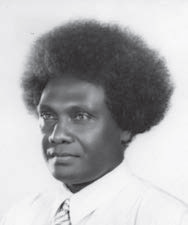
Marovo Lagoon tribesmen were considered the most warlike and cannibalistic of the Solomon Island tribes. They worshiped the spirits of their ancestors, whose skulls were kept after death. They lived in fear of the devil.
But around 1902, a Marovo chief named Tatagu began to wonder if he really needed to fear the devil. He decided to find out and not to attach a vine to the prow of his canoe on a fishing expedition. Vines were supposed to appease the devil and ensure a good catch. Without the vine, the fishing trip was a huge success. Chief Tatagu returned home to find a newborn son. He named the boy Kata Ragoso, which means “no devil strings.”
Kata Ragoso’s life would go on to reveal God’s power to transform a community and remove the strings and ties that the devil had over people.
Kata Ragoso grew up at a time when dishonest European traders enticed Solomon Islanders into their ships with foreign goods to kidnap them as slaves. But in 1914, when Kata Ragoso was about 12, a small white boat called the Advent Herald sailed into Marovo Lagoon. The crew didn’t try to entice or kidnap. Instead, Captain Griffiths F. Jones asked Chief Tatagu for land for a school. The next year, a school was built at Sasaghana, and Kata Ragoso enrolled as one of its first 23 students. At the school, he accepted Jesus and was among the first 10 Solomon Islanders to be baptized in 1918. He went on to work as a mission teacher, translator, and printing press operator. In 1935, he was ordained as an Adventist minister.
During World War II, Kata Ragoso was placed in charge of the Adventist work in the Solomon Islands. When the Japanese army invaded, they ordered him to kill people with white skin and from the Allied forces. For declaring that he would rather obey God than man, he was interrogated, flogged, and ordered shot. The interrogating officer, who had a strong dislike for the Adventist Church, instructed the firing squad to shoot at the count of three. He counted, “One, two . . .” but was unable to say “three.” He tried many times before giving up. After 10 days in prison, Kata Ragoso escaped. For the rest of the war, he led a rescue operation for Allied soldiers whose planes or ships were attacked. He rescued 27 U.S. pilots and 187 Australian and New Zealand soldiers.
Kata Ragoso died in 1964 at the age of 62, having served the church for 37 years. During that time, he saw the Marovo transformed from a warring community into a merciful people serving God.
This quarter’s Thirteenth Sabbath mission projects are in the South Pacific Division, whose territory includes the Solomon Islands. Thank you for planning a generous offering in March.
Provided by the General Conference Office of Adventist Mission, which uses Sabbath School
mission offerings to spread the gospel worldwide. Read new stories daily at
AdventistMission.org.